By Joe Harkins, Co-Chair, Joint Housing Committee.
Governor Wes Moore’s far-reaching and controversial legislation, the Starter and Silver Homes bill, will not pass in this session of the Maryland General Assembly. SB 36 failed to advance in the Education, Energy and Environment Committee of the state Senate, and HB 239 failed to advance in the Economic Matters Committee of the state House of Delegates. As previously reported, if enacted, this bill would have pre-empted the fundamentals of local zoning law, such as the definition of single family houses (to include townhouses), minimum lot sizes, and current setback and height requirements.
The stated goal of the bill was to increase housing at lower cost through “densification,” as required by the state, but enforced by local governments. Generally, counties and municipalities throughout the state opposed the bill, as did Montgomery County Executive Mark Elrich, although our County Council took no formal position. House Speaker Joseline Pena-Melynk attempted to develop a compromise bill that could pass the House and be re-introduced in the Senate. This effort continued until recently, despite each chamber having missed Crossover Day (the conventional way bills pass both bodies). The Speaker’s efforts have now ceased, although the Governor’s Office is reported to be working on another version for next year’s legislative session. The 2026 session ends April 13th.
Two companion bills, also seeking to increase housing in the state, appear to be advancing toward final passage. The Maryland Transit & Housing Opportunity bill, SB 389/HB 894, aims to free up state-owned land for housing near rail transit sites, potentially adding an estimated 7,000 units in Maryland. As amended, the House bill passed second reading, the step immediately prior to passage, and the Senate bill will likely advance there, too. A conference committee would need to iron out any differences between the two bills as passed. The Housing Certainty bill, SB 325/HB 548, would allow developers to lock in building permit approval for three to five years (depending on the bill version). In effect, this prevents local governments from changing permitting requirements when construction is underway. Apparently, such changes are more common in counties other than Montgomery. These bills met Crossover Day requirements and appear likely to pass in the General Assembly this session.
Your Joint Housing Committee will continue to monitor any late-breaking developments in the legislature before April 13th. And, we likely will be reporting to residents on housing issues next year, as well.
The House and Senate committees assigned to review the Governor’s proposed housing legislation [See this News article for a description of the bills] heard from a variety of panels, each consisting of five organizations or individuals grouped into three categories in relation to the legislation: Favorable, Favorable with Amendments, and Unfavorable.
Before the hearings were held, the Department of Housing and Community Development [DHCD], which is managing the bill on behalf of the Governor, met with a variety of stakeholders and agreed to a number of important amendments to the original bills. [See this News article that summarizes major amdts.] Some testimony at the hearings might have been different if the witnesses had known about the proposed DHCD amendments. Many of the amendments addressed concerns raised by those testifying.
While all witnesses submitted written testimony, their oral presentations focused on the issues they considered most important. This summary is based on those presentations.
FAVORABLE
The position of the several departments supporting the legislation are listed here. Others testifying in favor of the legislation cited similar points.
Maryland has a housing shortage-builders have not built enough in last 15-16 yrs.
Gap is 100,000 homes, just for current population, according to DHCD.
Only 49 % can afford median price of home; down from 75% in the prior decade.
90% say cost of housing is too high
88% say cost of renting is too high
36% considering leaving MD because of housing costs
½ net domestic migration is 17-35 year olds
Housing and lengthy commutes are top two reasons for leaving
Seniors have no viable options for obtaining a smaller, affordable home and leave, according to DHCD
Solution that this bill supports: Build More Smaller Homes by Increasing Density
Town houses [THs] cost 1/3 less per square foot than existing single family homes [SFH], according to DHCD
Allow THs to be built in areas zoned for SFHs only
Limit required lot sizes
Allow owners to split lots
Have fewer requirements, require smaller setbacks, front, back, side
More houses will provide a “relief valve” from cost of renting-would allow more renters to move to homes, which would open more rental options too.
FAVORABLE WITH AMENDMENTS
Local authority must be preserved.
It is better for the state to set targets and work together with local governments to achieve housing goals and let locals meet the need.
Looser setbacks and more density allowance will encourage McMansions; unintended consequence
There is no provision for affordability
Affordable housing requires government subsidy
Focus on results –Do not impose state rules on municipalities currently meeting or approaching housing needs
Do not kill local input by ruling out master planning process
MoCo works with COG numbers and has permitapprovals for enough units to meet need
By Right process preempts years of county planning and implementation
Adequate infrastructure must be in place
S36 will destroy process of master planning and community input and will substitute By Right process.
Focus on market means developers can sidestep county level incentives for affordability and workforce housing
Better – partnership of state and local
Agree on targets for local implementation
Incentivize locals to develop growth plans with affordability provisions.
UNFAVORABLE
Five foot side setback is too narrow; back setback too small
Amendments increase complexity; why interfere with local requirements at all
Respect HB1167 passed in 2025 session-reaffirmed zoning authority of munis.
By right undercuts MPDU
Cumbersome bill; there is not a single solution
Does not work even with amendments
Undermines coordinated planning
Infrastructure must accommodate local, county, and state requirements
Goals must support local planning
Bad to assign mandates down, but not accept responsibility up [at state level]
Specific arguments from some municipalities:
They already are building THs
Bill strips them of authority
2030 growth targets are being met
THs selling at or above median pricing
THs sell for more than SFHs
Conflicts with multiple local laws
Nothing addresses affordability
THs are luxury homes
Increased housing by 5% / year
OK for state to pressure us, but need time to meet targets
Introduction of the Legislation. After the Governor announced his plan to address the issues of housing in Maryland, the Department of Housing and Community Development [DHCD] prefiled HB239 in the House and the companion bill, SB36, in the Senate. See this PRA News article for a description of the original bills.
House Hearing. The House Economic Matters Committee held a hearing on HB 239 on February 12, 2026. Over 40 organizations and individuals testified.
Senate Hearing. The Senate Education, Energy, and the Environment Committee held a hearing on SB36 on February 17, 2026. Again, over 40 organizations and individuals testified, many of them the same groups and people who testified on HB239.
Amendments. By the time of the hearings, the Department of Housing and Community Development [DHCD] had already met with various stakeholders—primarily municipalities, political organizations, and some individuals—and had drafted multiple amendments which many of the members did not yet have at the time of the hearing. Jake Day, Sectary of DHCD, reported that the Department and the stakeholders had already agreed to many of these amendments and was optimistic that they could reach a compromise on most of the others. The department’s letter of explanation of the amendments along with the text is here. A brief summary of the major amendments is below.
Those testifying at the hearings were grouped into three categories of panels:
Favorable [to the legislation]
Favorable [at least to the goals of the legislation] but with Amendments
Unfavorable
Schedule. The schedule of meetings for the House and Senate committees does not yet indicate when they will consider the amendments or when they will vote on the committee-amended versions of the bills.
Critical Dates:
March 17: Each Chamber’s committees report their own bills by this date.
March 23: Each Chamber sends to the other Chamber those bills it intends to pass favorably. [So called Cross Over date.]
April 13: Legislature adjourns
Summary of Major DHCD Proposed Amendments to Original Bills
Limit development to areas where water and sewer will exist in the next five years.
Limit development to those areas intended for growth.
Areas outside designated growth areas are exempt.
Allow environmental design option.
Protect forests.
Exempt future historic districts.
Ensure building heights and setbacks are consistent with adjacent houses.
Allowable lot coverage maximum limited to 75%.
Confirm bill does not override local Adequate Public Facility Ordnances [APFOs].
Confirm bill does not allow stacked units or duplexes by definition of town houses.
Significantly, the amendments, as least so far, do not appear to change the By Right directive to allow town houses to be built in areas zoned for single family homes. Nor do they address affordability directly. The DHCH contends, however, that allowing townhouses on single family house lots will produce more houses at lower costs.
Summaries of the hearings by panel group will follow in the next News article.
This PRA newsletter from the Joint Housing Committee [JHC] contains three brief descriptions, obtained from a diverse set of sources, of HB239 and SB36, the housing legislation proposed by the Governor and being considered by the MD General Assembly. [See the previous newsletter for a description of the JHC.]
The first description is from the County Council staff report submitted in preparation for a Council session that included a briefing on some of the housing legislation being considered by the General Assembly.
The second description was prepared by the Montgomery County Civic Federation [MCCF]. For more from the MCCF see page 5 of their February 2026 newsletter.
The third description is an AI prepared overview posted to the PRA listserv by Parkwood resident Anne Gagne.
1.Staff Report for Council Briefing on Governor’s Housing Package
Information on State Housing Legislation HB239/SB36 – Land Use – Zoning – Limitations
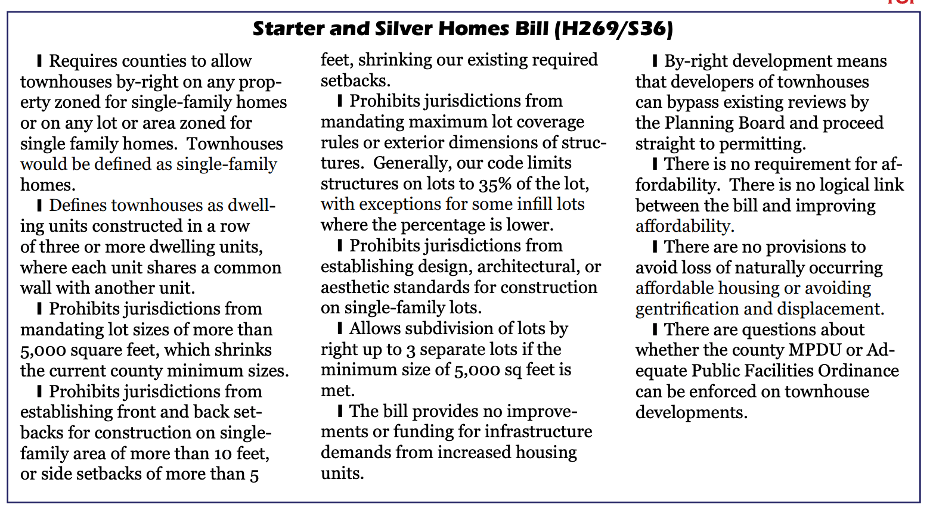
This bill applies to single family zones throughout the State and prohibits local jurisdictions (counties and municipalities) from enacting or enforcing laws that:
(1) establish minimum lot size for a single-family home greater than 5,000 square feet in areas served by municipal water and sewer;
(2) establish minimum dimensions, square footage, or lot coverage for a single-family home and any accessory structures;
(3) establish minimum setbacks greater than 5 feet (10 feet for front and back yards) for a single-family home;
(4) establish architectural, design, or aesthetic elements for a single-family home;
(5) prohibit the construction of town houses; and
(6) prohibit the owner of an improved lot from subdividing the lot into three or fewer similar lots. The bill specifies that it does not supersede building codes, fire codes, or public health and safety regulations that are necessary to address threats to public safety
The bill does not apply to: (1) an area designated as a historic preservation district before July 1, 2025; (2) agricultural land; or (3) conservation priority land.
Draft Maryland Association of Counties (MACo )Amendments
(1) Exempt all historic preservation districts.
(2) Exempt any area that is not connected to public water and sewer with sufficient capacity to support additional growth or not planned to be connected to public water and sewer within five years.
(3) Exempt counties with a population of less than 150,000 residents, not including residents within a municipality. The impact of this amendment is to make the bill applicable to eight counties (Montgomery, Prince George’s, Baltimore, Anne Arundel, Howard, Frederick, Harford, and Charles) and Baltimore City.
(4) Delete the prohibitions against local governments establishing setbacks and design, \architectural, and aesthetic standards.
(5) Specify that the bill does not supersede adequate public facilities laws or local equivalent density limits or allocations.
(6) Delay the effective date from October 1, 2026, to July 1, 2027, and impose a 10-year sunset.
2.Montgomery County Civic FederationSummary
The goal of this bill is to increase the supply of market rate housing and foster greater density in neighborhoods primarily by restricting local authority. [Ed. note: The correct number of the House bill is HB239].
3. AI Generated Overview
The Maryland Starter and Silver Homes Act of 2026, part of Governor Wes Moore’s housing agenda, aims to increase affordable housing for first-time buyers and seniors.
It limits local zoning regulations on minimum lot sizes ( < 5000 sq ft), allowing smaller, more affordable homes (predicted as up to 30% less expensive) and townhouses in residential areas.
Key details of the Act include:
Zoning Reform: Prohibits local governments from enforcing minimum lot sizes larger than 5,000 square feet, setting minimum square footage requirements, or restricting specific architectural styles.
Density Increase: Enables the construction of townhouses in areas previously restricted to single-family homes and allows for the subdivision of existing lots.
Target Demographic: Focuses on creating “starter” homes for younger professionals and “silver” homes for older adults looking to downsize and age in place.
Goal: To address the state’s housing shortage by reducing costs for new buyers by up to 30 percent compared to current market options.
The legislation is designed to remove restrictive barriers that hinder the development of smaller, more affordable housing options.
Key Implications of the Proposal:
Smaller Lot Sizes: Cities cannot mandate that a single-family lot be larger than 5,000 square feet (roughly 0.11 acres). This allows developers to fit more homes on a given piece of land, reducing land costs per unit.
No Minimum Square Footage: Local governments cannot require houses to be a minimum size (e.g., forbidding small homes under 1,500 sq ft). This encourages the construction of “starter homes”.
No Architectural Restrictions: Localities cannot restrict specific home styles or designs, allowing for modern, manufactured, or modular, and more diverse housing types.
Focus on Infrastructure: These changes typically apply to areas served by, or planned for, municipal water and sewer, mitigating health concerns regarding high-density, septic-reliant development.
Impact: Similar to reforms in Houston, this approach aims to reduce housing costs, create more “starter home” opportunities, and limit sprawl by promoting infill development.
This legislation addresses alleged “exclusionary zoning,” which has historically made it difficult to build lower-cost, smaller-footprint housing in many communities.
In the amidst of the recent listserv discussion about housing, one resident hoped that at least we could all agree on the beauty of these houses. Another resident called them the coolest ADUs in the neighborhood. The resilient and creative nature of our community gave us all a much needed lift during the ice storm of the century [although your editor must note that we are only into the first quarter of this century.]
Thanks to all who shared their photos. If I missed one or if anyone has other photos to share, please send them to me, and I will include them in an update.
With the introduction of Governor Moore’s three-bill package of housing legislation in the 2026 session of the Maryland General Assembly [GA], a Joint Housing Committee [JHC] has been established to try to provide residents with objective, timely, and non-partisan information about the measures.
The JHC will briefly describe the Governor’s bills, track amendments, monitor House and Senate committee hearings and votes, and summarize pro and con arguments. The initial focus will be on HB239 and SB36, which are the most controversial and will have the most impact on local housing. The next newsletter will carry a short summary of these companion bills. The JHC will provide information on related bills as needed.
The JHC as such will not take a position on any of the bills. Its primary purpose is to give residents accurate information that will enable them to form their own opinions about the proposed legislation and to decide for themselves whether to express their views to state delegates and senators.
The JHC includes representatives from the Parkwood Residents Association [PRA], the Kensington Estates Civic Association [KECA], the Byeforde/Rock Creek Highlands Citizens Association [B/RCHCA], the Town of Chevy Chase View [CCV], and the Town of Kensington [ToK]. In addition to working with the JHC to analyze the housing proposals, each of these associations or towns may take their own separate, formal position on the legislation and communicate that to the General Assembly. CCV and the ToK have, in fact, submitted a letter signed by ten other municipalities to the General Assembly . Additional statements, as well as competing bills, may be considered as this legislation moves through the GA.
Time is short. The General Assembly is scheduled to adjourn April 13. The House Committee with jurisdiction has already held a hearing [February 12] on HB239, and the Senate committee scheduled a hearing on SB36 for Tuesday, February 17. The JHC will provide summaries and links to these hearings when available.
We were engaged. We helped each other. We worked with our neighbors in other associations. We tended our gardens, and we put up a Maypole. We put up with the WSSC. We had fun even though our picnic got rained out. And Paul Snyder, our centenarian celebrated his 104th birthday.
Engagement
Our Beach Drive committee labored for a year and a half collecting data, surveying residents, writing papers, and working with staff to convince the Park and Planning Commission to reopen Beach Drive to cars on Fridays. During that time over 400 residents responded to four different surveys, the vast majority expressing their desire to open the road. We were successful even as we re-affirmed our commitment to keeping Beach closed on weekends. Our section of Beach Drive is now the only section of the road in Montgomery County closed to cars on Saturday and Sunday, and we will work to keep it that way.
Our Housing Committee worked jointly with representatives from the Kensington Estates Civic Association [KECA] and Byforde/Rock Creek Highlands [BRCH] for 18 months, studying the various proposals from Parks and Planning and from the County Council to increase the region’s supply of affordable housing. The joint committee kept residents informed on the content and status of the various zoning text amendments and legislative drafts so that they could express their opinions to our council members.
We met on site with MCDOT to discuss their plan to eliminate the right turn lane on Grosvenor Lane at MD 355. While agreeing with the need to improve safety for pedestrians and bicyclists at this busy location, we expressed our concern about the potential increase in congestion at an already failed intersection.
The efforts of residents writing to our state representatives, combined with the work of our Beach Drive committee to get MDOT to issue a work order, resulted in cross-hatching being added at key intersections on Knowles Ave to help reduce [at least somewhat] the amount of congestion on this heavily traveled road.
After surveying its members, the Parkwood Residents Association [PRA] wrote to the Board of Education and the Montgomery County Public Schools administration to support the position of the PTA of the Kensington Parkwood Elementary School [KPES], urging the Board to keep KPES students together during their educational journey through their currently designated middle and high schools.
As noted in these examples, the PRA reached out and joined forces with neighboring associations on an issue-by-issue basis on such concerns as housing, road closings, and safety.
Gardens and other Good Things
Our Beautification Committee worked many hours to improve and maintain our five community gardens: The Wildwood and the Saul Road medians; the entrance to Parkwood at Franklin Street and Beach Drive; the Parkwood Terrace Triangle; and the entrance at Cedar Lane and Beach Drive. The committee members also planted more daffodils at several places including the Roxbury median; the entrance to Rock Creek Path at Wildwood Road and Parkwood Drive; and the Saul Road island. The committee’s report of their extraordinary efforts this year is here in PRA News.
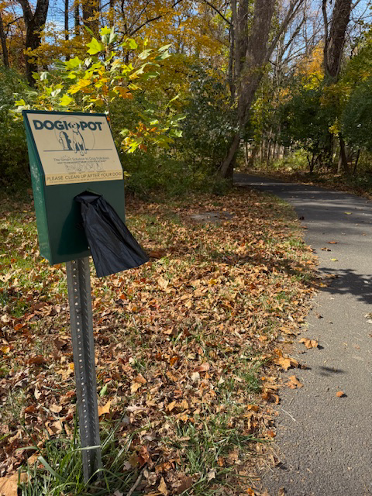
Six volunteers maintained dog waste bag dispensers at eight different locations in Parkwood. See the map here for gardens and bag dispensers.
Resident Lara Akinbami published an informative guide on how to add or replace and maintain trees in your yard and in the County right-of-way.
Mary Ellen Savarese, our Parkwood volunteer librarian, maintained three little libraries – one for adults and one for kids at the Wildwood Road garden, and one at the Parkwood Terrace Triangle- all of which were built or renovated by Rick Sniffin.
Stepping Up
Bill Zwack agreed to be the Parkwood Liaison to the WSSC water main replacement project which began in 2025 and will continue into 2026. Bill has done a superb job keeping residents informed about the project. He has also let the WSSC manager know when there were problems and getting them taken care of quickly.
Gerald Sharp provided residents with essential information on the ins and outs of going solar. He referred 23 residents of Parkwood and Kensington Estates to Lumina Solar, resulting in 7 installations with the company paying the PRA from $500 to $1000 per installation. The PRA returned $4800 back to the residents using Lumina Solar, and our respective resident associations received $700, with one more installation still to be completed. PRA’s information on solar panels also led to a number of people installing solar panels using different companies.
At the request of the PRA President, several members joined a special Advisory Committee to make suggestions to the Executive Committee regarding meeting topics and other activities the PRA might undertake for the benefit of the community.
Christopher Cross agreed to serve as the chair of the Beach Drive Committee, which is now also tracking the developments at the 355/Grosvenor intersection.
Joe Harkins agreed to serve as the PRA Civic Liaison, reaching out to other associations on issues of mutual concern. Joe also received the Montgomery County Civic Federation’s Star Cup, awarded to the Federation delegate or committee performing the most outstanding public service on behalf of Montgomery County. Joe was a major contributor to getting the Federation bylaws updated.
Michael Barber and Tracy Yaklyvich continued to serve as liaisons with a number of food truck vendors, ensuring that Parkwood and Kensington Estates residents had easy access to these convenient good food sources for as long as weather permitted.
Helping Out
Our PRA listserv was active and lively as always. Neighbors shared helpful and timely information in response to hundreds of requests such as where to find a plumber in the middle of the night or what company could help with water in the basement or assistance finding a lost dog and even a parrot. Early risers gave “heads ups” on morning traffic problems and residents posted warnings about other situations that warranted attention, such as unlicensed vendors knocking on doors. And after doing a fall or spring cleanup, many offered their “no-longer-needed” treasures free at the curb rather than sending them to the landfill.
Residents always responded to listserv requests for things for people in need such as shoes and coats, holiday gifts for kids, and food. No call ever went unanswered.
Sharing Information
As much as we enjoy talking to each other in-person, we have made good use of technology to stay in touch.
The PRA listserv has over 1,200 members. Although the system does not count each posting, there were well over 2,800 separate message threads this year.
PRA News, a blog that replaced the former printed newsletter, had over 50 articles published in the last year-and-a-half since it began in 2024, covering a wide range of topics of interest to residents, such as proposed rezoning proposals, the Labor Day Parade and Art Show, and solar energy.
The PRA website is our general information source about Parkwood. It includes notices and minutes of our meetings, a map of our neighborhood, historical documents, lists of officers, info about the water main project, etc. The website has had 3764 visitors and 6744 page views so far this year.
PRA Meetings
Winter 2025: Topics included 1) the proposed 2025 PRA budget 2) the latest housing proposals introduced by Councilmembers Friedson and Fani-Gonzalez 3) the possibilities forinstalling a mobile speed calming device that tells drivers how fast they are going 4) efforts to petition the Planning Board to re-open Beach Drive to traffic on Fridays and 5) a recommendation of our PRA Advisory Committeetocoordinate tree planting with the County in order to restore some of our lost tree canopy. Presenters were all Parkwood Residents.
Fall 2025: Topics included stormwater management presented by Montgomery County staff and a discussion of residents’ safety concerns. Both of these topics will be visited again at future meetings.
Because 2026 will be an election year, PRA hosted the first of a series of sessions with each the three candidates individually for the office of County Executive. By inviting the candidates to the sessions by themselves rather than as a group, we are able to focus on how each candidate would address the issues of most importance to Parkwood residents. The first session was with candidate Will Jawando.
Keeping Safe[r]
Our Safety Committee continued to post important advice about how to keep property safe [especially cars], avoid scams, and look out for each other.
A little known but vital effort by the PRA Listserv Managers has been to keep potential scammers off our listserv. This has become a serious problem lately, and Susie Stritar deserves special recognition for the many hours she has devoted to this critical work to keep Parkwood safe.
Membership
Thanks to the hard work of the Membership Chair, Susie Stritar, the Parkwood Residents Association has one of the largest percentages of registered members among all associations in the County. It also has a healthy balance sheet thanks to thoughtful, membership-approved spending and to the generous additional donations by members to the Beautification fund. This means we have been able to keep annual dues at $10 per household for over 20 years.
OFFICERS, COMMITTEE CHAIRS, COMMITTEE MEMBERS, OTHERCONTRIBUTING MEMBERS
OFFICERS President, Kira Lueders Vice President, Jeff Griffith Secretary, Mary Ellen Savarese Treasurer, Gerald Sharp
COMMITTEE CHAIRS/MEMBERS
Beautification, Kira Lueders, Chair Clare Murphy Gerald Sharp Jan Rothman Paula Flicker Lara Akinbami
Civic Liaison, Joe Harkins, Chair
Listserv, Rob Shroff, Chair Susie Stritar
Membership, Susie Stritar, Chair Gerald Sharp
Safety, Gabrielle Prandoni, Chair
Webmaster, Rob Shroff
Welcoming, Gabrielle Prandoni, Chair
SPECIAL COMMITTEE CHAIRS/MEMBERS
Advisory, Barbara Coufal, Chair Michael Barber Wendy Nevett Bazil Allison Gallaway Nate Ivey
Beach Drive, Christopher Cross, Chair
Jeff Griffith Joe Harkins Kira Lueders Paul Clark Joan McDermott, KECA With contributions from: Scott Stuckey Smita Varia Zachary Youth Carol Placek David Beck Kelly Decerbo Jan Rothman
Housing
Jeff Griffith, Co-Chair Joe Harkins, Co-Chair Christopher Cross Kira Lueders Clare Murphy Gerald Sharp Joan McDermott, KECA Kirill Pivovarov, KECA Jennifer Semel, KECA Mike Heyl, BRCH Paul Besozzi, BRCH Eileen Sarsfield, BRCH
Other Executive Committee Members and other Contributing Members
Assistant Treasurer, Paula Flicker
WSSC Liaison, Bill Zwack
MCCF Delegates
Joe Harkins Kira Lueders Jeff Griffith Amy Waychoff
PRA News Editor, Jeff Griffith
L’il Library Builder, Rick Sniffin
Past President, Bailey Condrey
Volunteers Maintaining Dog Waste Bag Dispensers
Kathy Card Gail Dalferes Condrey Debbie Blumenthal Qing Yao Kira Lueders Gerald Sharp
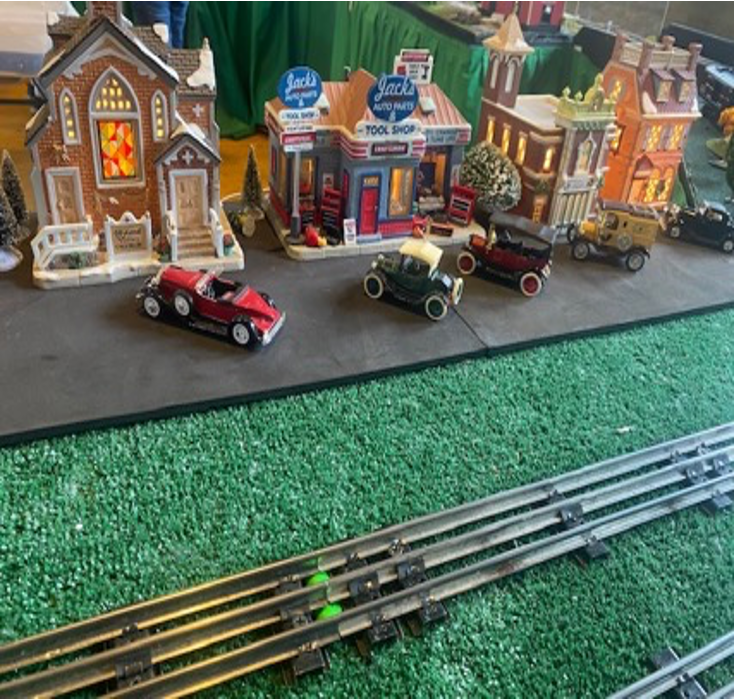
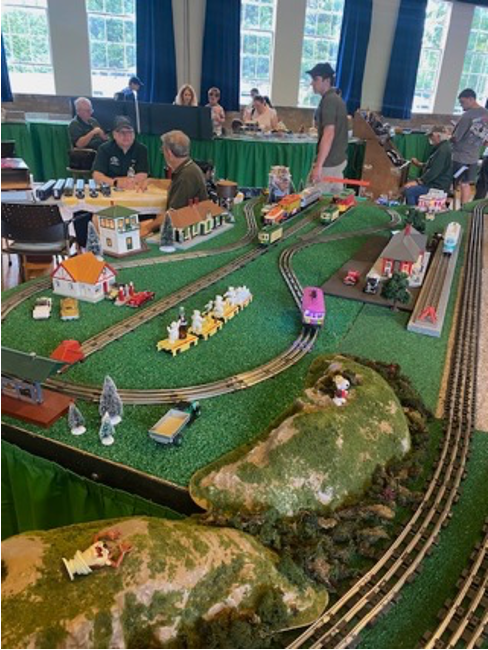
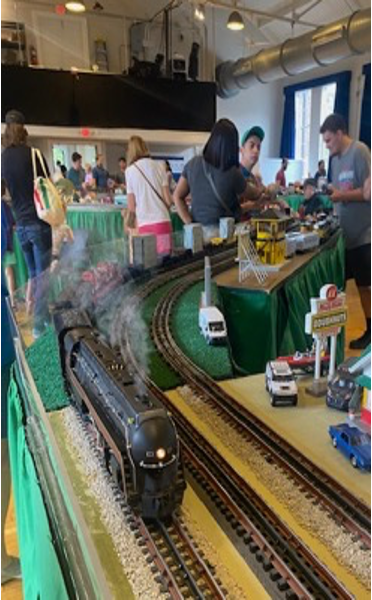
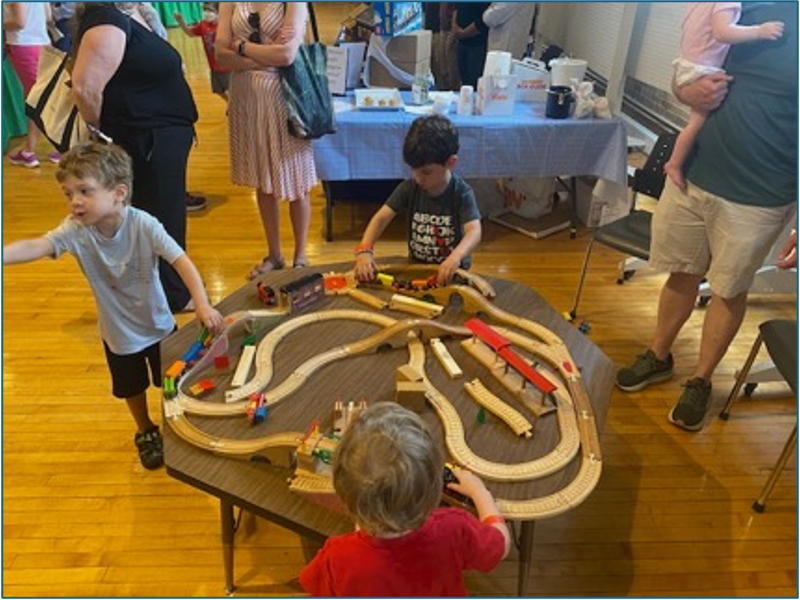
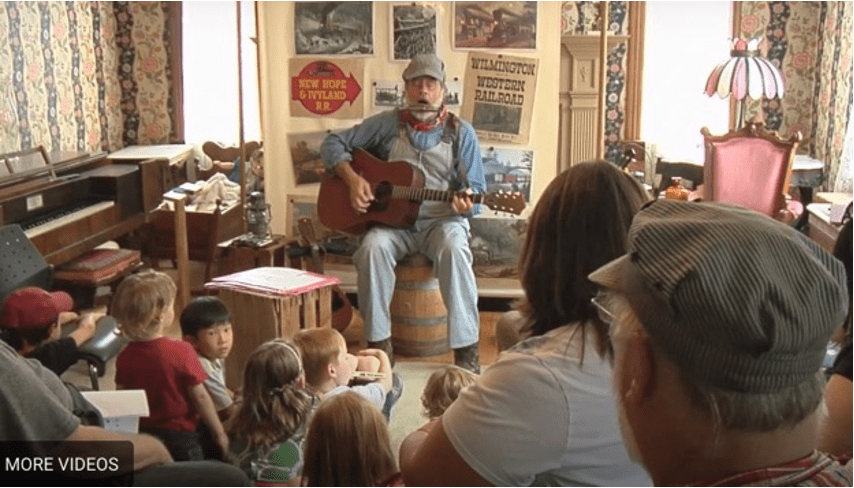
Some of us have a close personal connection from our childhood with model trains and the end of year holiday season. The annual train show that comes to the Kensington Town Hall arrives a bit earlier than that – every September, in fact. But take a look at this great video capturing kids’ expressions as they watch the trains and listen to Mattew Todd, who shares railroad songs and stories. In case any of you nostalgia buffs missed it, here are a few photos from this year’s show, courtesy of Joe Harkins, PRA volunteer photographer and from the video.
The National Capital Trackers, a local club, run “O” gauge electric trains on multiple layouts, with flourishes such as train whistles, steam, depots, and bridges. The show is sponsored by the Ditto Group of Long & Foster Real Estate and the Town of Kensington. Proceeds benefit the Noyes Children’s Library Foundation (noyeslibraryfoundation.org)and the Kensington Historical Society (kensingtonhistory.org)
The PRA budget for 2025 set aside $5000 for the Adalberto Landscaping contract and $2000 for planting new perennials and new plants for the Parkwood gardens supported by the PRA. So far this year we have paid Adalberto Landscaping $3,935 and paid a total of $486 for additional plants, primarily daffodil bulbs and labor to plant them and to do additional work in the gardens not covered under the Adalberto contract. Following is a description of this additional work that has been accomplished this year.
[By Gerald Sharp, PRA Treasurer and member of the Beautification Committee]
Parkwood Triangle
Two years ago, the county landscapers mowed down in full bloom the 500 daffodils we had planted in the big circle on the median at Parkwood Drive and Parkwood Terrace, which didn’t allow the bulbs to regenerate for the next year.
March 2024 before daffodils were mowed
A week later after daffodil massacre
I complained to Kate Stewart’s office, and they directed me to the county office responsible for mowing the medians. They suggested putting up “Don’t Mow” signs in the future. Last March when the daffodils came up again, I posted signs next to the circle and also at one of the corners of the median where we had planted bulbs in the past. This was successful, and the flowers were spared—both in the circle and in two of the corners. The daffodils in the circle came up again in 2025 but there were no blooms; we hope they will bloom again next spring in 2026.
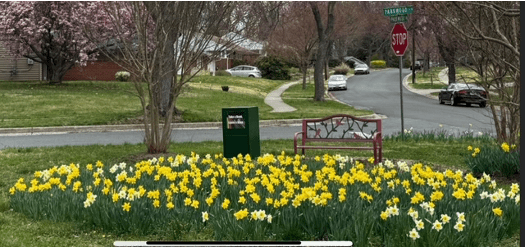
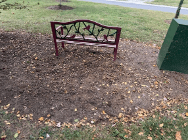
This fall the PRA hired a worker to drill the holes for planting bulbs, and we planted daffodils at the three corners of the Triangle and also in the mulched areas at the bases of the trees. We also planted daffodils and tulips behind the bench. I am experimenting to see if planting daffodil bulbs in the same holes as tulips will protect the tulips from the deer that like to eat them. I will post No Mow signs when the flowers bloom in the spring and then remove the signs and mow them down in June after they have regenerated.
Roxbury Median with Mailbox
The PRA Beautification Committee planted daffodils here several years ago, but none survived being mowed by the county landscapers. This fall we planted 150 daffodil and tulip bulbs here together in the same holes as part of my experiment to see if the daffodils can protect the tulips from the deer. We also planted a barrier of just daffodils around the entire planting area. I will post a No Mow sign here when they bloom and then cut them down in June, reverting the area back to grass.
My assistant drilling holes for daffodils at this location.
Entrance to Parkwood at Parkwood Drive and Cedar Lane
The Committee planted crocuses here several years ago, but they are all gone now after being mowed. We planted some daffodils in the mulched area and also in the grass. I will install a No Mow sign here when they bloom in the spring and then remove it in June and have the area mowed, reverting it back to grass.
Entrance to the Path to the Park at Wildwood and Parkwood Drive.
Kira refills the dog waste bag dispenser here and suggested planting daffodils here. We planted them on both sides of the path. After they bloom in the spring, I’ll put a No Mow sign here and then remove it in June and have the area mowed, reverting it to just grass.
Jonquel Lane-the cut through next to my house connecting Edgefield Road to Parkwood Drive.
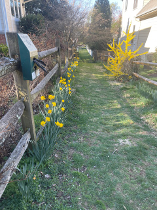
As shown in the photo, where there used to be daffodils on both sides of the path that is especially popular with dog walkers, there are not many daffodils remaining on the right side. This October, my assistant and I planted about 150 bulbs there to replenish them. My neighbors and I mow the grass here, so we don’t have problems with the county lawn cutters mowing down the flowers
Saul Island
Members of the PRA Beautification Committee, Clare Murphy, Kira Lueders (Chair), and I planted 150 daffodil bulbs in the mulched areas of the island which get sufficient sunlight, including the section with the spruce tree and a mulched area around one of the central bushes. There is no grass in these areas, so there won’t be a problem with the county crews cutting them down.
If you compare pictures of Parkwood from 10-20 years ago to the scene today, the loss of tree canopy is obvious. The causes of tree loss—aging street trees, storm damage, and clear-cutting lots for new construction—show no sign of relenting. However, if you walk the streets, you will see numerous new tree plantings. This investment in the health and beauty of our neighborhood is something you can take part in, for free!
Need more convincing? Of the many benefits of trees, the two identified with the highest direct economic benefit are increased property values and storm water management. See this USDA article. Pepco also recognizes the important benefit of home energy savings and offers free trees to customers (more on that below). Additional benefits include noise control, improved air quality, and improved landscape.
There are various opportunities to get new trees on your property for free or reduced cost:
Free trees, planting included:
Montgomery County Street Trees. If you do not have a tree on the county easement on front of your property, had one removed, or have a current tree in bad shape, the County will plant one for free. Call 311 or visit this county webpage. For more information about tree removal, stump grinding and the tree species available, visit this county webpage.
Tree Montgomery, per their website: “Tree Montgomery is looking for places to plant shade trees on private property for free. Our trees are more than 10 feet tall when we plant them, and they will eventually grow to more than 50 feet tall, providing many benefits for you and your neighborhood.” To apply for free yard trees, visit this page. After applying, you will receive an email from Tree Montgomery within 6-12 months. Tree plantings occur only during the winter months.
Reforest Montgomery run by the Montgomery County Planning Department. This program has a goal to increase the tree canopy in urban areas. Parkwood is in the eligible area. Applications for fall plantings are accepted from February 1 through February 8 of each year, while applications for spring plantings are accepted from August 1 through August 8 of each year. See this page and mark your calendar now!
Free trees, plant yourself:
Pepco periodically partners with Arbor Day Foundation to provide free trees to customers. Pepco will mail 2-4 foot tall trees on a first-come-first-served basis. To be notified when trees will be made available next, enter your email address at this website. In 2023, I received a tiny dogwood tree that is now 6 feet tall despite being eaten by deer the first year (I.e., be prepared to provide screening protection for small trees).























 Parkwood Residents Association